Retail and commercial banks
Overview
Retail and commercial banks are a crucial part of finance and sit at the centre of the financial system, facilitating a bridge between individuals and businesses who have spare money and those who need to borrow it.
Retail banks serve individuals with services such as current accounts, savings accounts, mortgages, personal loans and credit cards, whilst commercial banks offer businesses services such as loans, trade finance, overdrafts and cash management services. In the UK, most major banks are “universal banks”, meaning that a single banking group will run retail, commercial, and investment banking under one roof, such as Barclays or HSBC.
Examples
- Lloyds Banking Group: Lloyds is the UK's largest retail bank by customer numbers and is built heavily around mortgages and current accounts.
- Barclays: Barclays runs a huge UK retail arm and a global investment bank.
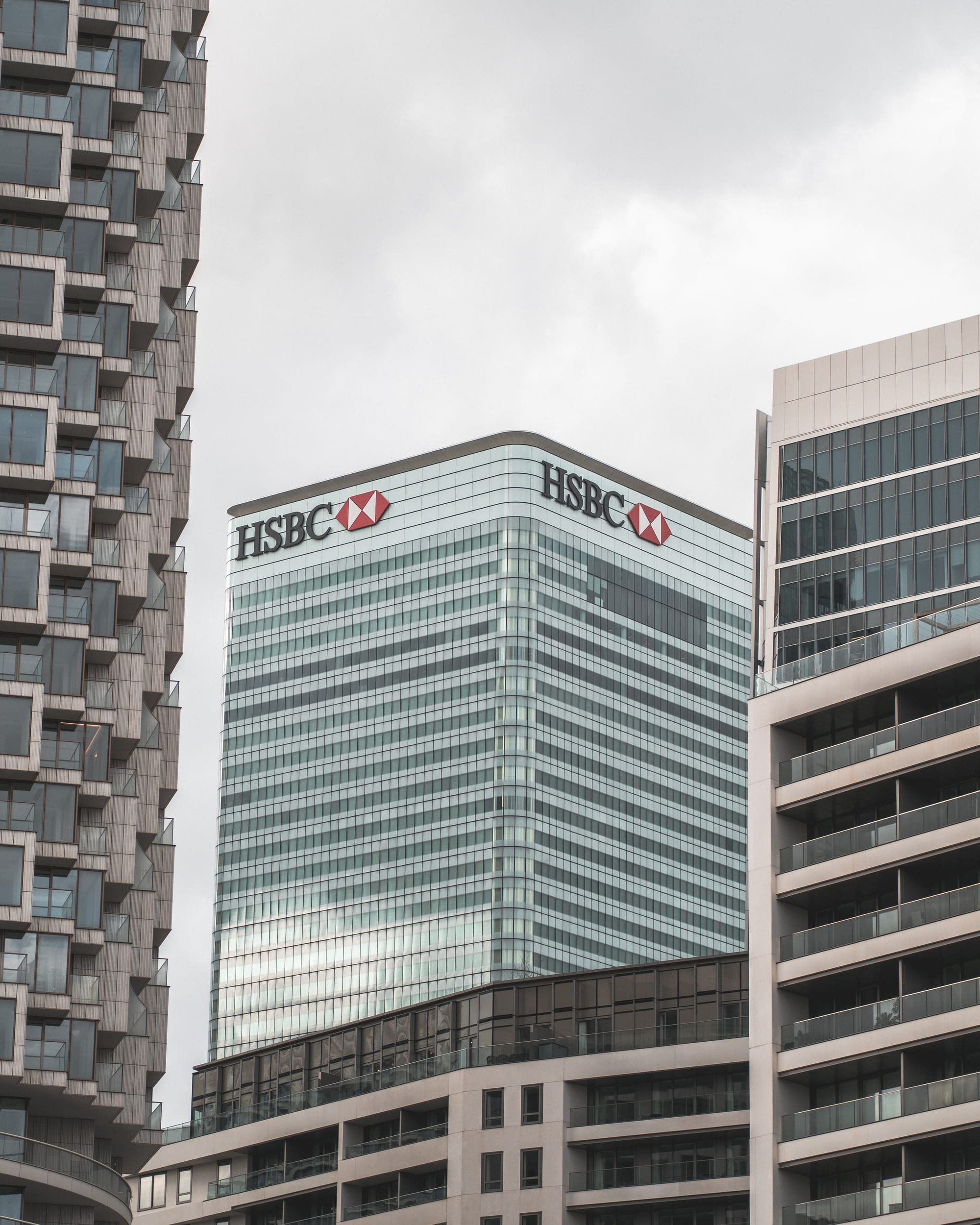
- HSBC: HSBC is a retail-focused bank in the UK but is most understood as a global bank, with its strength lying within Asian markets.
- NatWest Group (formerly Royal Bank of Scotland): NatWest Group is a majority state-owned bank after the 2008 financial crisis, only fully returning to private ownership recently.
- Santander UK: Santander UK is the British arm of the Spanish banking group. It is mostly known for its 1|2|3 current account and strong mortgage book.
Core functions
To put it simply, a retail or commercial bank has 4 functions: to take deposits, to extend loans, to maintain payment infrastructure, and to act as a financial intermediary that channels savers’ savings to borrowers who need it.
Retail lending includes mortgages, loans, credit cards, and overdrafts, whilst commercial lending covers business loans, invoice financing, and trade finance for companies that operate internationally and move goods globally.
How they make money
The biggest source of profit for banks is called the net interest margin. This refers to the gap between the interest paid to savers and the interest rates charged to borrowers. Furthermore, banks can earn fee income from charging for accounts, foreign exchange, and payment processing. Banks may also sell complementary products such as insurance policies and investment products to their customer base.
Fractional reserve banking and credit creation
When loans are given out by banks, they aren’t simply the money that has been deposited with them; what actually happens is new money created each time they issue a loan, because a loan is deposited straight back into the banking system in the form of a new deposit that can itself support more lending, which is called fractional reserve banking.
Fractional reserve banking explains why the total money supply in an economy is a multiple of a central bank's reserves, and why bank lending has such an amplified effect on the economy.
The effect of monetary policy
When the MPC (Monetary Policy Committee) vote to change the UK base rate, it doesn’t directly affect consumers, but works through the banking system.
A rate rise increases banks’ own cost of funding, which is then passed on through higher mortgage and personal loan rates, whilst also passing on higher rates to savers. This is a transmission mechanism that explains the significance and effect of central bank policy on individuals and households.
Regulation
UK banks are regulated by two bodies, which are the Prudential Regulation Authority (PRA) and the Financial Conduct Authority (FCA), The PRA oversees their safety in terms of making sure they hold enough capital to survive losses, whilst the FCA oversees how they treat customers.
Basel III sets international minimum capital requirements that banks must hold against their loans, and since 2008 UK banks have been required to “ring-fence” their core retail banking operations to their riskier investment banking activities, so that losses in investments would not affect ordinary customer savings.
Risks and criticisms
Banks can carry credit risk, which is when borrowers default on their loans when they are unable to pay it back. Furthermore, they also may carry liquidity risk when too many depositors want their money back quickly, leaving the bank with no money (known as a bank run and seen in Silicon Valley Bank in 2023 and Northern Rock in 2007). The great financial crisis in 2008 exposed how excessive the risk-taking in banks had been with their loans, which threatened the wider economy. As a result, many banks received fines and heavy criticism from the public.